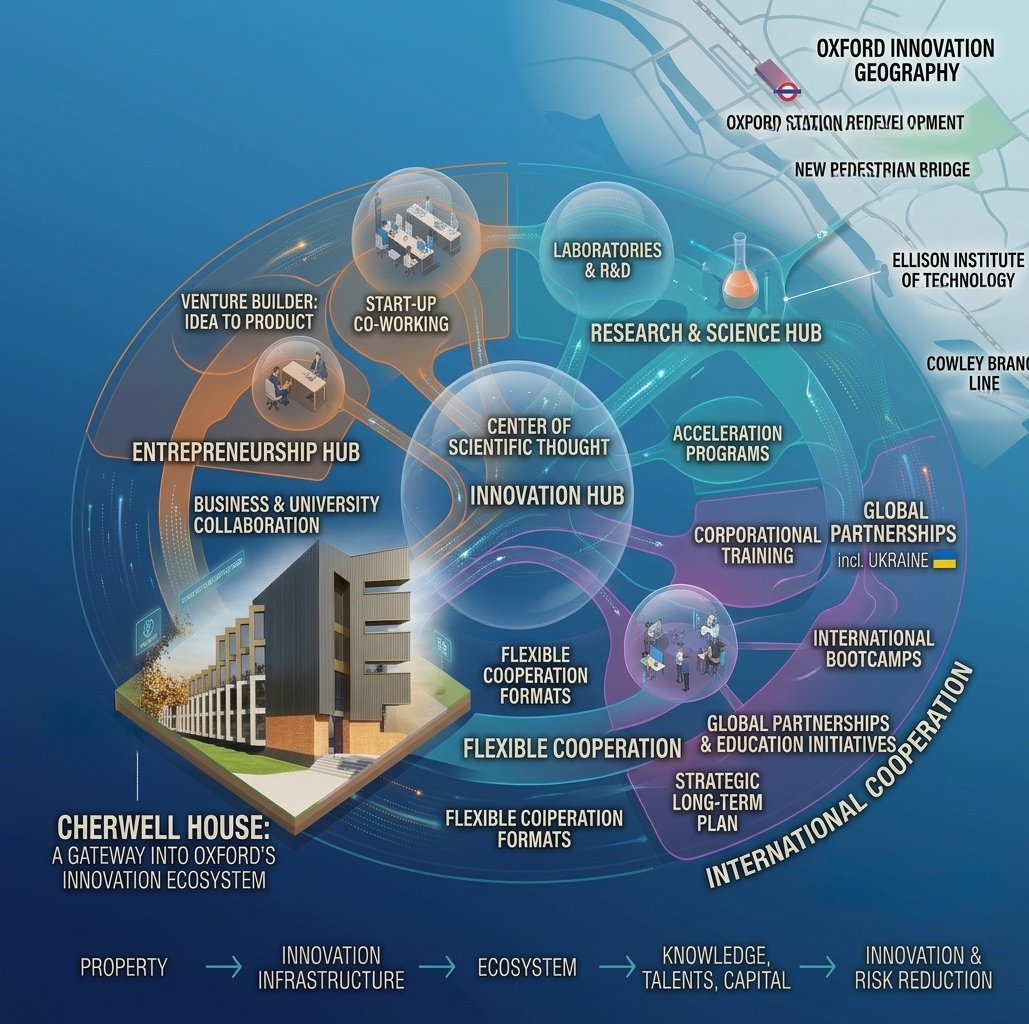
Cherwell House: a Gateway into Oxford's Innovation Ecosystem

An interview with
Helen Clarke, Vice Principal, Cherwell College Oxford
Helen, who is the ideal investor for Cherwell House?
A strategic investor or entrepreneur who understands the value of innovation infrastructure and wants to see it develop over the long term. The property is only one part of a much broader model. Around it sit educational programmes, research projects, corporate training with access to commercial laboratories, sector-specific initiatives, bootcamps and spaces for entrepreneurs. It is precisely this combination that creates real value.
Why does this investment model feel especially timely?
Many investors today are looking to reduce risk. Classic venture investment means backing an idea or a start-up outright — with a real possibility of losing the capital entirely. Property offers a far more stable foundation: it generates rental income and appreciates over time. But it becomes genuinely interesting when that property sits inside an actively developing innovation environment. The combination of a tangible asset with the capacity to grow new projects around it is what deserves attention.
“This isn’t simply about investing in a building. It’s about taking part in shaping an environment where education, entrepreneurship, research and international collaboration reinforce one another.”
So this isn't just about property investment?
Exactly — it combines two components. The first is investment in quality real estate: Cherwell House is built to a contemporary design, using modern construction technology and meeting high energy-efficiency standards. The second is the development of an innovation ecosystem around the building. One future direction is a Venture Builder — a structure that helps promising technology projects move from idea to commercial product. For some teams that means help going to market; for others, finding partners, analysing the sector, developing a business model or preparing to raise investment. A good technology on its own rarely guarantees a successful business — it needs to be properly embedded in the market.
Why does the project have real potential today, not just on paper?
Because many elements of the model already exist: educational programmes, experience running bootcamps, an established professional community, partnership connections and our first corporate projects. That allows us to develop initiatives step by step rather than starting from zero. This is the evolution of an existing ecosystem, not the launch of an entirely new project.
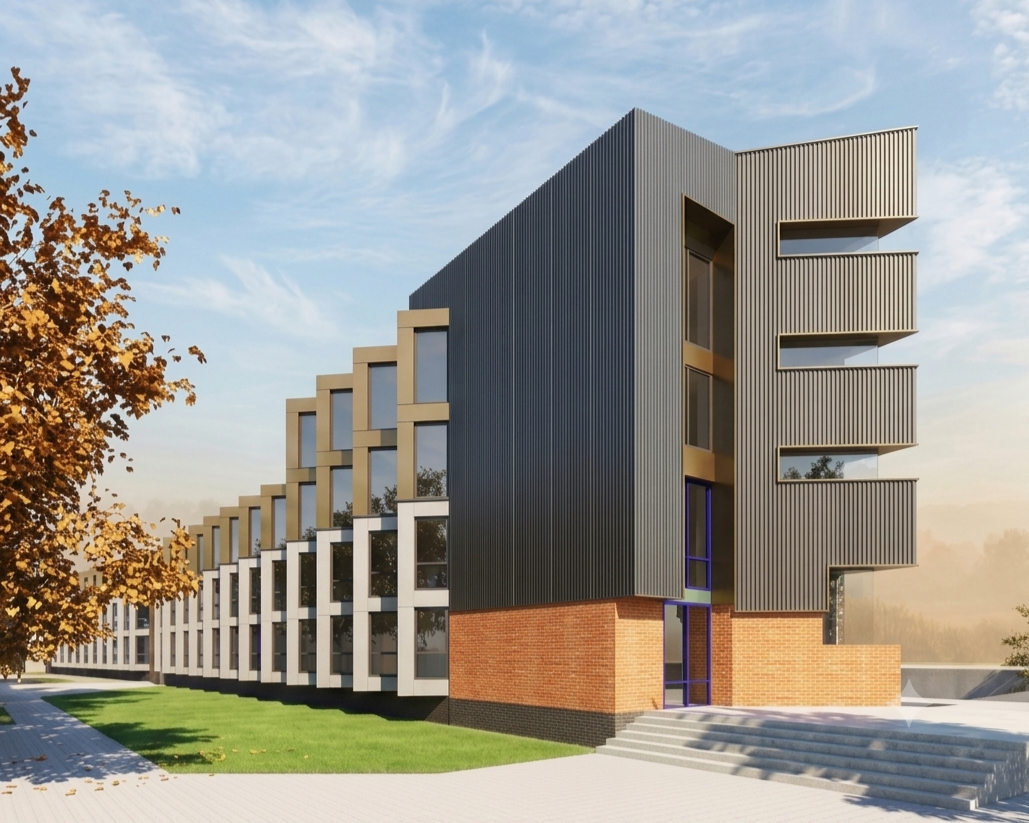
The Cherwell House is located in the centre of Oxford
How important is the Oxford location itself?
Perhaps the most important factor of all. Build a modern technology space in an isolated location and the question is inevitable: who will travel there? It is quite different when a site sits at the intersection of flows — universities, researchers, entrepreneurs, international companies, investors and visitors from many countries, connected by transport infrastructure. That intersection creates the conditions in which innovation arises naturally. We are part of the West End — the largest regeneration zone in central Oxford in decades, whose official plan alone provides for more than 13,000 new jobs by 2040. Elsewhere in the city's innovation ecosystem, the Ellison Institute of Technology is developing strongly at Littlemore, on the Oxford Science Park site, backed by Larry Ellison. It isn't next door to us — but once the Cowley Branch Line opens, that part of the city will be minutes from Oxford Station, and therefore from us, drawing the parts of Oxford's innovation ecosystem significantly closer together.
What is physically changing around Cherwell House right now?
This is exactly what sets us apart from speculative projects — the infrastructure is funded and being delivered. The £161m redevelopment of Oxford Station is in its final phase: the new platform capacity is already in service, and the rebuilt Botley Road reopens in August 2026. A couple of minutes from us, a new £10m pedestrian and cycle bridge across the Thames will connect Osney Mead with Oxpens — also fully funded. These are not promises on paper; they are approved budgets being spent.
“Real value isn’t created by the building itself. It’s created by a place where talent, knowledge, capital, universities and international connections intersect.”
How does this approach differ from the traditional university model?
Traditional universities do an enormous amount of valuable work, but large institutions inevitably operate through complex procedures. That is precisely why more flexible formats of collaboration between universities, business and entrepreneurs often develop faster. Platforms of this kind can launch new programmes quickly, bring together specialists from different sectors and respond to what the market needs.
What role could Ukraine play in this ecosystem?
I see huge potential here. Even today we can train specialists, run international bootcamp programmes, develop joint educational projects and bring together British and Ukrainian entrepreneurs. Over time this could lead to joint ventures, new technology solutions and professional communities working across several markets at once. Education is a natural starting point for that kind of collaboration.
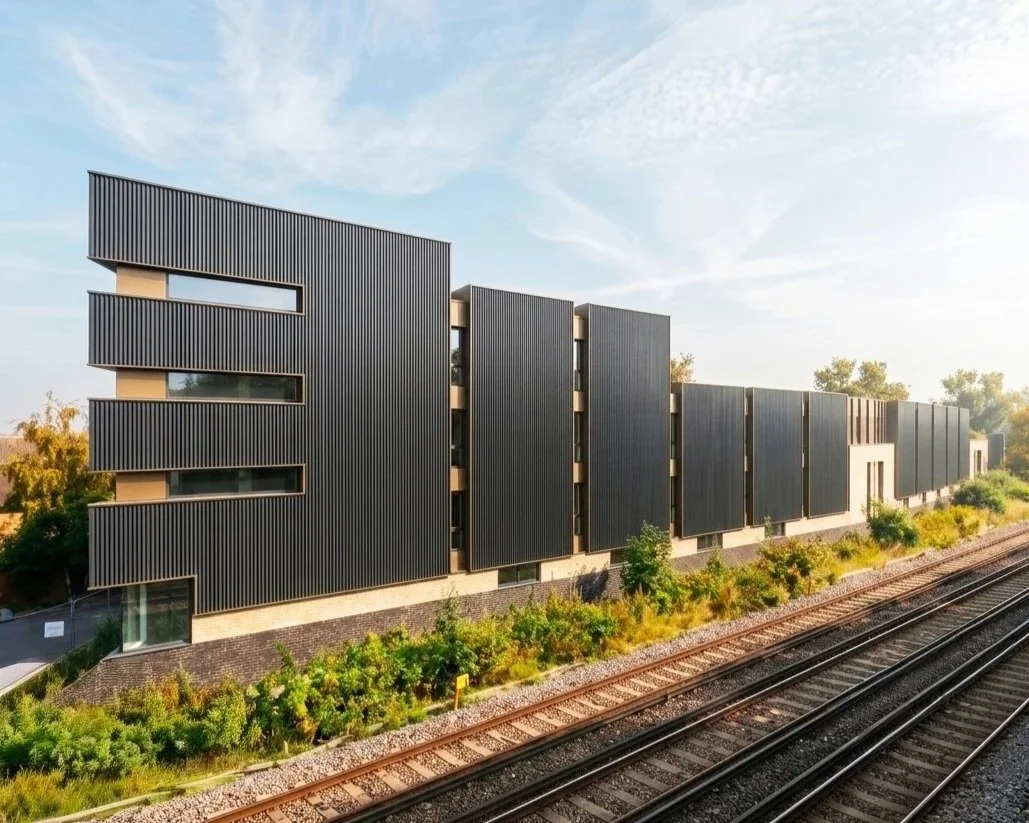
Where innovation, enterprise and talent meet the routes that carry them
What does an investor gain beyond income from the property?
Access to the ecosystem — and to venture building. It is the opportunity to join a community where new entrepreneurs, researchers, students, start-ups and international partners regularly appear. A bootcamp gives way to an acceleration programme; new companies and investors follow. That is how a living innovation environment takes shape. The property is its foundation, but the real value is created by people and the connections between them. That is why I see Cherwell House not as a single building, but as a platform capable of bringing together education, innovation, entrepreneurship and international collaboration in one place.
What would you say to an investor who is still unsure?
That they are getting not a square metre of floor space but access to a working platform: property plus an ecosystem that delivers regular income, a flow of talent and start-ups, and a role in training people for high-tech industries. The region has set itself the goal of becoming carbon-neutral by 2040, ten years ahead of the UK's legal deadline. This is not a one-off project — it is part of a systematic strategy built over decades, and we sit at its centre.